niime 百科
Encyclopedia of niime
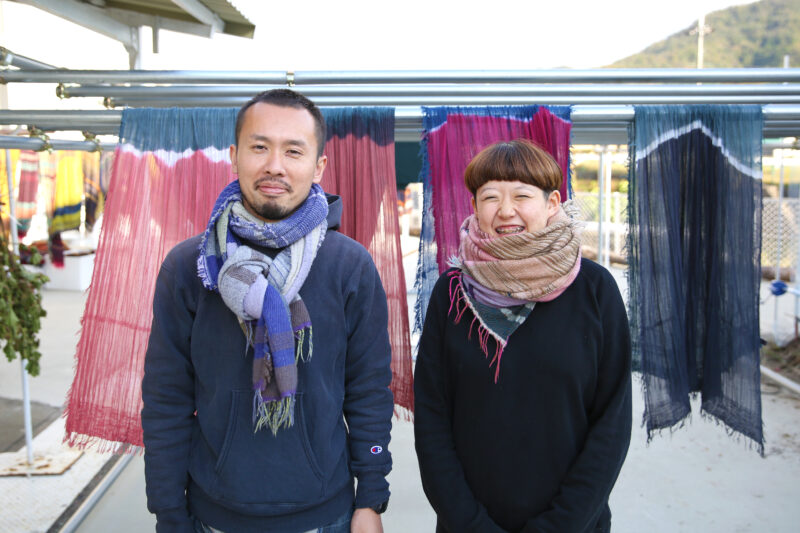
藤本×石塚 tamaki niimeと暮らしの日常を語る。
〈後編〉
Fujimoto × Ishizuka — Talking About Daily Life with tamaki niime
〈part 2〉
〈後編〉
〈part 2〉

2025 . 12 . 25
〈前編からの続き〉
ーモノづくりだったり、デザインという面では昔と比べてどうですか?
石塚「私が今の皆んなと少し違うのは、社長としっかり一緒にモノづくりしてきた時間が長くて。例えば、線や色の組み方だったりを一対一で観てもらって、ここってもう少しなめらかな方がきれいだよとか、デザイン的なアドバイスをすごくもらって、私もしっかり出来るようになってきたんですね。」
ーお弟子さんみたいな。
石塚「今は人数が多い分、皆んなで創ろうっていう意識も高くなって、スタッフそれぞれの個性がデザインや色や作品に反映されるようになってはきてるんですけど、これがいいよね、みたいな感覚的な部分を伝えるのがすごく難しくて。多分社長にしても創作の面で“バトンを渡す”ってすごく難しかったと思うんですよ。こちらが想っているのとは違うものが上がってくると、その『いいよね』って感覚を擦り合わせるのが難しい。私は必ずしもいいとは思わないけれども、本人はそう思うわけだから。」
ーう~ん。。
石塚「そこはtamaki niimeならではの『やってみたらどうだ』という実験精神に則ってるわけで、これを今回はやってみようとなって、実際にお客様の反応を観たりした結果、ここを改善していこうねと次の展開に繋がっていくので、そこは良いところなんですけど。」
ーかつては玉木さんのもとで石塚さんがやってたモノづくりの擦り合わせを、今は石塚さんがスタッフとやっているというわけですね。
石塚「はじめの頃は一対一でやってたところが“一対多”になるわけだから社長も大変だろうし。でも皆んなそこを咀嚼しながらそれぞれのモノづくりに落とし込んではいるので。皆んなでやるというのは良い部分も多いけど、そういう難しい面もありますね。」
ーう~ん、なるほど…。
玉木「一本の軸がなくなった感じはあったよね。」
石塚「…そうですね。確かに。」
玉木「(石塚と)二人でやってた時は、私がやりたいことを、一緒になってやってたから。」
石塚「学べる。すごく。近くで。」
玉木「基本的には私のワガママってゆうか(笑)。それを共有するってスタイルだったから、石塚さんの方には全部が入っていくじゃない?」
石塚「“tamaki niime”がね。」
玉木「あ、それが“tamaki niime”なんだなってゆうのを刷り込まれて、そこからのクリエーションだから、土台がちゃんと出来てるんだけど、その次の世代からは、石塚から引き継いでね、って伝えたけど、引き継げてる部分と引き継げてない部分とがあって、上がってくるモノを観た時に、『なんでやねん??』みたいな。」
石塚「(笑)。…そうそう。土台ですね。」
玉木「土台がない。“美しいとは何か?”みたいなところが、ちゃんと共有できてなくて、それぞれ好きなもんつくると、わちゃわちゃになっちゃう。…さあ、どうしよう?みたいな。」
石塚「やっぱり、“tamaki niime”っていうものをベースにモノを創るので、“tamaki niime”ってなんなんだ?っていうところを、そこを落とし込まないと、次の発展には行けないというのはありますね。」
玉木「個人プレーみたいになっちゃった時に、いやそれがアカンっていうわけじゃないけどさ、否定したいわけじゃないけど、という。その落とし込みは結構難しかった。」
石塚「難しかったですね。“tamaki niime”というブランドである以上は、そう。うん。」
玉木「そこをわかってほしいが、なかなか伝わらないジレンマはある。」
参加者Yさん「質問時間が後であるということなんですが…」
ーどうぞ。仰ってください。
参加者「tamaki niimeのデザインのポイントというか、そこに一本、あるもの…」
玉木「筋(すじ)ね。」
参加者Yさん「ひとことではなかなか難しいと思うんですが、よく耳にするのは『一点モノ』という言葉があるんですけど、多分それだけが本質とも違うような気がするんです。素人にも伝わるように、tamaki niimeのデザインとは?を、広報的にも、創り手側としてひとことで伝えるとしたら、何でしょうか?」
玉木「伝えてもらおう、広報として(笑)。」
石塚(笑)
ーこれは難しい(笑)。
藤本「…ひとことではちょっと難しいですね。」
石塚「ひとことで言えないブランド(笑)。」
参加者Yさん「そうそう、それが答えってゆうのもありですよね。」
玉木「そうだね。」
藤本「でも、『観に来て』って思うし、ってところかなぁ。なんか、伝えるってことがすごく難しい気がするけど、なんだろうね?…なんか感覚的な部分だと、人によって捉え方が違うしね。やわらかいとかね。」
参加者Yさん「逆に私が感じたことで言わせてもらうと、コロナの時に『タマスク』とロールケーキをお手紙を添えてきれいな箱に入ったものをいただいたんですね。その時に触れたtamaki niimeのデザイン、僕はひとことで言うと、“やさしい”と思いました。」
玉木「うん。正解です!」
〈一同歓声、拍手〉
石塚「社長、地元の比延地区で配りに行きましたね。」
玉木「行った!」
参加者「人によって違ってそれでいいと思うんです。」
石塚「いいと思います。はい。」
ー“やさしさ”がtamaki niimeのモノづくりの根底にあるというのは、そう感じますね。
石塚「そうですね…。」
玉木「お母ちゃんが娘に服をつくるみたいな。そういうもんでしょ?」
参加者Yさん「ありがとうございます。」
石塚「ほんとにね、受け取り方は色々でもいいのかなと思いますね。」
ー親から子への愛情、それは『一点モノ』なんだということにも通じるかと思います。
石塚「ほんと、『一回ウチに来て!』ってゆうのが一番にあります。」
玉木「うん、『一回来て!』って感じやね(笑)。それキャッチフレーズにしよ。」
ーtamaki niimeとは?と、色んな方にひとこと募集してみるのもいいかも知れませんね。
玉木「皆んなそれぞれに違うこと言って。」
ー言葉の表現は違っていても、感覚的には通じ合う言葉になるのかなと。
玉木「うんうん。」
石塚「だから難しいのかも。言葉にするってゆうのは。」
ーそうそう。そうですね。
石塚「それをもがきながらやってるってゆうのが、面白い。」
ーもがきながら、というのが良いですね。
石塚「そういう意味では、すごく人間らしくて、皆んな。社長もそうだけど、やっぱりこう、感情とか気持ちってものがダイレクトに作品になるから。ほんとに面白いんですよ。調子が悪い時に並べた配色を翌朝になって観たら、ちょっと違う…ってなって、織りながらも変えたりして。普通のアパレルだったらそんな生産出来ないと思うんですよ。この青って色が決まってたらそれで織るので。わたしたちなら、この青にしてたけど違う青もやってみよう、みたいなことがその場で出来るから。そこにすごく気持ちが載っていく。面白いんですよ。」
藤本「発信を担う立場の人間としては、この5年間でモノづくりの体制がしっかりと構築されて来たこととか以外にも、社長の変化というか、外にすごく出るようになって来てる感があるし、情報を取りに行っているであるとか、コロナの前と後で…」
石塚「全然違うかも。」
藤本「大きな変化と言ったらあれですけど。」
石塚「私も影響を受けたというか。社長がすごく外に出たり人と関わることが増えて来た頃に、何年前になるのかな…二人目を妊娠してる時に、「中畑寮」という、会社の宿舎があるんですけど、ここに住め、と。それまでは西脇市の中では大都会というか、チェーンストアが立ち並ぶエリアのアパートにいて…」
玉木「二人目の前か。ちっちゃなアパートに親子三人で暮らしてたんやな。こんなとこで子どもを育てたらアカン、と。」
石塚「結婚したり子どもを産むスタッフも増えて来た中で、やっぱり、のびのび暮らした方がいいという提案があって、今いる寮に引っ越したんですね。玉木睦美さんとも共同生活を始めたんですけど。」
ー西脇の比延地区の奥の、山に囲まれた中畑町にあるんですよね。
石塚「比延の奥で、気温も5°Cくらい違うんですよ。」
藤本「寒いなぁ。」
石塚「むっちゃ寒くて。でもほんと山と川に囲まれた、何もなくて空気が澄んでる、すごくいい場所なんですね。そこに引っ越して、他の人と一緒に生活するということが、私たちの中ですごいターニングポイントになったんです。」
ーはい。
石塚「最初は共同生活が不安だったんです。だって家族と単身者が一緒に住むわけだから、どうなるんだろう?と。でもそこはすごくお互い仲も良くて、睦美さんも子ども好きなのでうちの子の面倒見てくれたり。そうすることで、家に帰ってもtamaki niimeがあるっていうことと、二人だけで子育てしてないなって、すごく助けられたんですね。」
ー気持ち的にも楽に…
石塚「やっぱり、アパートにいた時は、一人目だったというのもあるし、(藤本が)帰るの遅いし、帰ったら倒れてるしで、私もなんかすごく孤独だったんですよ。でも、そうやって住む場所が変わって、二人目を産んで、自分にもちょっと余裕が出て来て、世界が広がったというか。こんなちっちゃな暮らしの変化でも、自分の気持ちとかが、ほんとに変わって来たのをすごく実感してて。だからなんだろうな…落ち込まないってゆうか。自分の中に入り込み過ぎないってことが自然に出来てきたのがすごく大きくて。」
ーなるほど…
石塚「部屋が全部で11LDKあるんで(笑)、インターン生とかの受け入れもするんですよ。短期でtamaki niimeに勉強しに来たいって子を2階の部屋に泊めて。そこもコミュニケーションを取りながら過ごして。私が部屋で寝てても誰かが廊下を通ったりということもあるんで、言ってしまうと、プライベートがないんですね。そんな中でも私は人と過ごすのが大好きだから、そこも変に落ち込まない理由になってるというか。」
藤本「色んな人がほんとに来ましたね。」
玉木「最多人数何人よ?」
石塚「11人や(笑)。」
玉木「すごくない?」
藤本「インターンで就職希望の人たちだけじゃなくて、大学のゼミで単位を取るために研修したりだとか…」
石塚「あと、橋本一家が自宅をリフォームするからその間部屋を貸してくれとか(笑)。」
藤本「結局半年くらい住んだのかな。」
石塚「2ヶ月のはずが半年住んだんですよ!子ども同士も年が近くて面白かった。」
玉木「なかなかできない経験でしょ?」
石塚「それは普通じゃ出来ないし、2年前にミャンマーの子たちが3人就職して、一気に多国籍になって。子どもたちが家に帰ったら色んな人たちがいる、みたいな。ミャンマー語教えてもらったりして。で、中畑町っておじいちゃんおばあちゃんが無茶苦茶多いんですよ。子どもは5人くらいしかいなくて少ないんですけど、地域の人が皆んなを見守ってるみたいな。かといって過剰に干渉しては来ないし、ほんとにいい距離感で。玉木さんとこの、みたいな。皆さんtamaki niimeファンで、藤本家じゃなくて、玉木家みたいになってる(笑)。」
ーtamaki niimeファミリー(笑)。
石塚「中畑寮での共同生活が、私たちの今の暮らしのベースになったというか。それで病まないというか心が安定するところが、会社に行っても、人との関わりをまろやかにしたり、モノづくりに落とし込めたり。生活が一体であることが私の中ではここ数年の一番の変化かなと思います。会社以外のコミュニティの関わりもほんと増えたんですけど、そんな色んな暮らしの場があって、私たちの中でtamaki niimeと共存しているというか、そんな感覚を持って過ごしてますね、今。」
ー「『niime村構想』というのがtamaki niimeにはあります。お話を聞いて、中畑寮での藤本家の暮らしのあり方というのも『niime村』のひとつの現れなのではと感じました。『niime村』について広報としてはどうでしょうか?
藤本「僕は色んな方とお仕事させていただくことが多い立ち位置だし、『niime村』のことを訊かれた時に、地域の人たちとか、tamaki niimeの周りの方たちと関わり合いをしながら、一緒により良い環境であるとか、何かを創っていくところを僕はイメージするし、自分たちの関係性みたいなところがどんどんと広くなっていった時に、tamaki niimeを支えてくれる人たちが増えて行って、逆にこちらが支えることもあるだろうし、そんな関係の構築というのが、僕の想うところですね。」
石塚「うん。」
藤本「代表も含めて自分たちがやっていることに、色んな人が興味を持ってくれたりだとか、関わり合いには色んなステップがあると思うし、色んなタイプの人たちとディスカッションもしながら創り上げていくものなのかなという気が僕はしていて、正解・不正解というのはわからないですけど、基本的にはそういう部分を大切にして行くと見えてくるものなんじゃないかな、と思ってますね。」
ー藤本さんには広報という肩書きに留まらない、色んな役割があると思うんです。地域の子どもたちにコットンの種を渡して栽培にも関わってもらったり、将来へ向けての、まさに“種まき”の活動にも携わっておられますよね。それもまたtamaki niimeを伝えることでもあり、広報に限定されない『伝え人』という役割なのかなと。
藤本「実は今日(10月21日)もtamaki niimeの畑でコットン収穫ができるように開放しています。素材を日本で西脇でつくってゆく、という取り組みをカタチにしたのが『純粋な国産』というtamaki niimeの一気通貫するモノづくりだし、ウチの目指している自然とともにあるモノづくりを表現していると思うんですよね。作品に触れてもらう、Labに来てもらう以外にも畑に入ってもらって、大人以外にも子どもさん、ファミリーでも良いし、11月には小学生が70名くらい来てくれて一緒にコットンを収穫しましたし、ご近所の子ども園の子たちとはもう4年間くらいやってて…」
石塚「けっこう長いよね。」
藤本「それも毎年種まきから、生育観察をして10月に収穫するということをずっとやってて、年長さんが来てくれるんですけど、最初の方の子たちは小学校の2年生や3年生になってて、そこで社会見学でまたtamaki niimeに戻って来てくれてるんですよ。これがどんどん積み上がっていって、もしかしたら、次に中学生になった時に、また来てくれるかもと…」
石塚「『トライやる・ウィーク』があるから(笑)。」
※「トライやる・ウィーク」中学校2年生を対象に、学校・家庭・地域が連携して実施される、1週間(5日間)の職場体験や福祉体験などの活動。「生きる力」の育成と「心の教育」の充実を目的として1998年度から始まった兵庫県独自の取り組み。
藤本「高校生になって、アルバイトができる高校だったらまた戻ってきてくれるんじゃないかな、とか。学校の行事で来てくれるんじゃないか、大学のゼミで研究のために訪問してくれるんじゃないかとか…僕たちがやっていることを、長期で見た時に、子どもたちに何かが残っていったら、必ずtamaki niimeに帰ってきてくれるんじゃないかと。時間がかかるし大変なことだと思うんですけど、そんな風にやれることがあるというのがすごくモチベーションになるし、それを繋げていけたら、ウチの取り組みをしっかりと伝えてゆくことができるのかなと。そこは大事にしたいなと思っています。」
石塚「さっきコットンの話をしてくれたんですけど、自分がそれについて“知っている”ということが、すごく大事だと思っていて。動物さんと暮らしてるのも、私たちが使っている素材がこの子たちの毛なんだなと、すごく身近に感じながら作品としてカタチになってゆく。実際にはすべてを素材として使えてるわけではないけれど、ただつくっているだけじゃない、この一連の流れを私たちが知っているからこそ、それが身に付けられるまでを、想像できる。そんなところがすごくモノづくりでは大事かなと思っていて。こういう素材が糸になり作品になってゆくってことを、皆さんがtamaki niimeを通じて観てくださると、今まで見ていた世界とは異なる部分がより感じられるのかなと。」
ーそれこそ『一回観に来て』、と。お客様にとっても、tamaki niimeの素材からの一気通貫したモノづくりに、直に触れられる場でもあるということですね。
石塚「なかなかモノづくりの現場を観るって、機会がないかと思うんですけど、tamakiniimeにはいつでも来れるしいつでも触れ合えるから、そんなひとつの学びの場でありコミュニティの場でもあるように、暮らしと世界観をしっかりと伝えていければいいのかなというのは、ずっと思っています。」
書き人越川誠司
〈Continued from Part 1〉
― Compared to the past, how do you feel things have changed in terms of making things and design?
Ishizuka:What’s a little different about me compared to everyone else now is that I spent a long time working closely with the president, really side by side, making things together. For example, she would look at how I combined lines and colors one-on-one and give very concrete design advice, like, “It would be prettier if this part were a bit smoother.” Through that process, I gradually became more capable myself.
― Almost like an apprentice.
Ishizuka:Now that there are more people, there’s a stronger awareness of creating things together, and each staff member’s individuality is starting to show more clearly in the designs, colors, and finished pieces. But it’s incredibly difficult to convey those intuitive feelings—like, “This feels right.” I think it must have been very hard for the president as well to “pass the baton” creatively. When something comes out that’s different from what you had in mind, aligning that sense of “this is good” becomes difficult. I might not necessarily think it’s good, but the person who made it does.
― Hmm….
Ishizuka: That’s where tamaki niime’s experimental spirit of “why don’t we try it?” comes in. We decide to try something, then actually observe customers’ reactions, and based on that, say, “Okay, let’s improve this part next,” which leads to the next development. So that’s definitely a strength.
― So in the past, you were aligning that process of making things under Ms Tamaki, and now you’re doing that alignment with the staff.
Ishizuka: At the beginning it was one-on-one, but now it’s one-to-many, so I’m sure it’s hard for the president, too. Still, everyone is digesting that and incorporating it into their own way of making things. Creating together has many good aspects, but it also has its challenges.
― I see…
Tamaki: It felt like we lost a single central axis, didn’t it?
Ishizuka: …Yes, that’s true.
Tamaki: When the two of us were working together, you were helping me do exactly what I wanted to do.
Ishizuka: I learned so much—being that close.
Tamaki: Basically, it was my selfishness (laughs). That style of sharing everything meant that it all flowed into Ishizuka, right?
Ishizuka: ‘tamaki niime,’ itself.
Tamaki: You were thoroughly imbued with what ‘tamaki niime’ was, and from there you created things, so you had a solid foundation. But with the next generation, I told them, “Take over from Ishizuka,” and some parts that were passed on, and some weren’t. When I look at what comes out, sometimes I’m like, “What is this supposed to be??”
Ishizuka: (laughs) Yes, exactly. The foundation.
Tamaki: There’s no foundation—no shared understanding of something like “What is beauty?” When everyone just makes what they like, it turns into chaos. Then it’s like, “So… what do we do now?”
Ishizuka: Because we create things based on “tamaki niime,” we have to really internalize what “tamaki niime” actually is. Without that, it’s hard to move on to the next stage of development.
Tamaki: When it turns into individual play, it’s not that that’s wrong—I don’t want to deny it—but getting that foundation across was really difficult.
Ishizuka: It really was difficult. Since we are ‘tamaki niime’ as a brand.
Tamaki: There’s a constant dilemma of wanting people to understand that, but not being able to fully convey it.
Participant Y: I hear there will be time for questions later, but…
― Please, go ahead.
Participant Y: When it comes to the key point of tamaki niime’s design—something like a single guiding line—
Tamaki: A ‘through line’, right?
Participant Y: I know it’s hard to put into words, but I often hear the term one-of-a-kind. Somehow, though, that alone doesn’t feel like the full essence. If you were to explain what tamaki niime’s design is, in one phrase that even a layperson could understand—from both a PR and creator’s perspective—what would it be?
Tamaki: Let’s have our PR person answer (laughs).
Ishizuka: (laughs)
― That’s a tough one (laughs).
Fujimoto: …It’s hard to put into a single phrase.
Ishizuka: A brand that can’t be summed up in one phrase (laughs).
Participant Y: Exactly—that could be the answer itself.
Tamaki: True.
Fujimoto: But I think it comes down to ‘Come and see it for yourself.’ Communicating it is really difficult. It’s so sensory, and people perceive it differently—like softness, for example.
Participant Y: If I may share my own impression: during COVID, I received a Tamask and a roll cake, beautifully boxed with a handwritten note. When I encountered tamaki niime’s design then, the word that came to mind for me was ‘gentle’.
Tamaki: Yes—that’s the right answer!
(Cheers and applause from everyone)
Ishizuka: President, you went around handing them out in the local Hie district, didn’t you?
Tamaki: I did!
Participant: I think it’s fine if it’s different for each person.
Ishizuka: I agree. Absolutely.
Interviewer: That sense of ‘gentleness’ really does feel like it lies at the heart of tamaki niime’s approach to making things.
Ishizuka: Yes…
Tamaki: Like a mother making clothes for her daughter. That kind of thing, right?
Participant Y: Thank you.
Ishizuka: I really think it’s okay for people to take it in differently.
— Parental love passed down to a child—that also connects to the idea of one-of- a-kind.
Ishizuka: Honestly, the first thing we want to say is, “Just come visit us once!”
Tamaki: Yeah, it’s like, “Just come once!” (laughs). Maybe that should be our catchphrase.
― It might be interesting to ask lots of people to describe “What is tamaki niime?” in just one phrase.
Tamaki: Everyone would say something different.
― Even if the words differ, the feeling might still connect.
Tamaki: Uh-huh.
Ishizuka: That’s probably why it’s so hard—to put into words.
― Exactly.
Ishizuka: Struggling with that is what makes it interesting.
— That struggling part is good.
Ishizuka: In that sense, it’s very human. For everyone—including the president. Emotions and feelings go straight into the work. It’s really fascinating. You might line up colors when you’re not feeling great, then look at them the next morning and think, “Hmm, this isn’t quite right,” and change them as you weave. In regular apparel production, you couldn’t do that. If a certain blue is decided, you just weave with that. But we can say, “We chose this blue, but let’s try a different blue too,” right there on the spot. Feelings really get woven into it—that’s what makes it interesting.
Fujimoto: From my position as someone responsible for communication, beyond the fact that our production system has become more solid over these five years, I’ve also felt a change in the president—she’s been going out into the world much more, actively gathering information. Before and after COVID…
Ishizuka: It’s completely different.
Fujimoto: It might be a big change.
Ishizuka: I think I was influenced too. Around the time when the president started going out more and interacting with more people… how many years ago was it now? I was pregnant with our second child, and he told us, ‘You should live in Nakahata Dormitory,’ which is a company residence. Until then, we’d been living in an apartment in what felt like the ‘big city’ area of Nishiwaki—lots of chain stores and all.
Tamaki: That was before your second child, right? The three of you were living together in a tiny apartment. And I remember thinking, ‘You can’t raise kids in a place like that.’
Ishizuka: As more staff members were getting married and having children, there was this idea that it would be better to live more freely and spaciously. So we moved into the dormitory we’re in now. That’s also when we started communal living with Mutsumi Tamaki.
— That’s deep in the Hie district of Nishiwaki, in Nakahata Town surrounded by mountains, right?
Ishizuka: Yes, deep in Hie—and the temperature is about five degrees Celsius lower there.
Fujimoto: That’s cold.
Ishizuka: It’s really cold. But it’s an amazing place—surrounded by mountains and a river, nothing around, and such clear air. Moving there and living together with other people became a huge turning point for us.
— I see.
Ishizuka: At first, I was anxious about communal living. I mean, families and single people living together—how would that work? But everyone got along so well. Mutsumi loves children, so she helped look after ours. Just knowing that tamaki niime was still there when I came home, and that we weren’t raising our kids alone, was such a huge support.
— Emotionally too, it must have felt lighter…
Ishizuka: When we lived in the apartment, it was our first child, and (Fujimoto) came home late, completely exhausted. I felt really lonely. But then we changed where we lived, had our second child, and I gained a bit more emotional space. My world opened up. Even such small changes in daily life really changed how I felt inside. Because of that, I don’t sink into things as much anymore—I don’t get stuck inside my own head. That’s been a really big shift for me.
— I see…
Ishizuka: The place has eleven rooms total—an 11LDK (laughs)—so we also host interns. Students who want to come study at tamaki niime stay upstairs for short periods. We spend time communicating and living together. Even when I’m sleeping in my room, someone might walk down the hallway—so, honestly, there’s no privacy. But I love being around people, and that’s another reason I don’t get weighed down.
Fujimoto: So many different people have really come through.
Tamaki: What was the maximum number of people?
Ishizuka: Eleven (laughs).
Tamaki: That’s amazing.
Fujimoto: Not just interns hoping to get jobs, but also university students doing training for course credit….
Ishizuka: And then the Hashimoto family asked to rent a room while they renovated their house (laughs).
Fujimoto: They ended up staying about half a year, didn’t they?
Ishizuka: It was supposed to be two months, but it turned into six! Their kids were close in age to ours, which made it fun.
Tamaki: That’s not something you get to experience very often.
Ishizuka: Definitely not. And two years ago, three people from Myanmar joined the company, and suddenly it became very international. The kids would come home and there would be all these different people around. They even learned some Burmese. Nakahata Town has a huge elderly population—there are only about five children—but the whole community kind of watches over everyone. They don’t interfere too much; it’s a really good balance. Like the Tamaki family. Everyone’s a tamaki niime fan—it’s more like the Tamaki household than the Fujimoto household now (laughs).
— The tamaki niime family (laughs).
Ishizuka: Communal life at Nakahata Dormitory became the foundation of how we live now. It keeps us from getting worn down—it stabilizes our hearts. That carries over into how we interact with people at work and how we channel it into making things. Over the past few years, the biggest change for me has been that life and work feel completely integrated. Our involvement with communities outside the company has really grown too, and with all these different places of living, tamaki niime feels like it coexists within us. That’s how we live now.
— tamaki niime has the concept of the Niime Village. Listening to you, it feels like the Fujimoto family’s way of living at Nakahata Dormitory is one expression of that Niime Village. From a PR perspective, how do you see Niime Village?
Fujimoto: I work with many different people, so when I’m asked about Niime Village, I imagine building better environments and creating things together while engaging with local residents and people around tamaki niime. As those relationships expand, more people come to support tamaki niime—and sometimes we support them in return. For me, Niime Village is really about building those kinds of relationships.
Ishizuka: Yeah.
Fujimoto: When people, including our representative, take interest in what we’re doing, there are many levels of involvement. I think it’s something you build through discussion with all kinds of people. I don’t know if there’s a right or wrong answer, but I believe that by valuing those connections, something meaningful eventually comes into view.
— You seem to play many roles beyond just PR. You give cotton seeds to local children and involve them in growing it—real ‘seed-planting’ activities for the future. That also feels like communicating tamaki niime, not limited to publicity, but as a kind of messenger.
Fujimoto: Actually, today—October 21—we’ve opened our cotton fields so people can come and harvest. ‘Purely made in Japan’ represents tamaki niime’s fully integrated manufacturing approach—making materials in Nishiwaki, Japan—and it expresses the kind of nature-connected craftsmanship we aim for. Beyond touching the products or visiting the Lab, people can enter the fields too. Not just adults, but children and families. In November, about seventy elementary school students came to harvest cotton with us. We’ve been doing this with a nearby nursery school for about four years now….
Ishizuka: That’s quite a long time.
Fujimoto: Every year, from planting seeds to observing growth and harvesting in October. The kids who came at the beginning are now in second or third grade, and they come back to tamaki niime on school field trips. As this keeps building, maybe they’ll return again in junior high….
Ishizuka: For ‘Trial Week’ (laughs).
‘Trial Week’ (Try Yaru) is a Hyogo Prefecture program started in 1998, offering one-week work and welfare experience programs for second-year junior high school students, in cooperation with schools, families, and local communities.
Fujimoto: And then maybe again in high school as part-time workers, or with school events, or even university research visits. If something stays with them over the long term, I believe they’ll come back to tamaki niime. It takes time and effort, but knowing we can do that is incredibly motivating. If we can keep those connections going, we can truly communicate what we’re about—and that’s something I really want to value.
Ishizuka: When you talked about cotton earlier, it reminded me how important it is to know what you’re working with. Living with animals, feeling close to the fact that the materials we use come from their wool—it becomes real as the work takes shape. We can’t use everything as material, but because we know this whole process, we can imagine how it becomes something you wear. That’s incredibly important in making things. When people see how materials become yarn and then products through tamaki niime, I think they start to perceive the world a little differently.
— It’s like saying, ‘Come and see it for yourself.’ For customers too, it’s a place where they can directly experience tamaki niime’s fully integrated craftsmanship, starting from the materials.
Ishizuka: There aren’t many chances to see manufacturing up close, but at tamaki niime, you can always visit and always interact. I hope it can be a place of learning and community—somewhere that clearly communicates our way of living and our worldview. That’s something I’ve always believed in.
Original Japanese text by Seiji Koshikawa.
English translation by Adam & Michiko Whipple.